LAA connectivity
The Linaro Automation Appliance should be connected to the fleet management cloud service to operate properly.
The fleet management cloud service is responsible for keeping the LAA up-to-date with the latest software releases, connect the LAA to the right LAVA instance and configure the connected DUT.
In order to register on the fleet management cloud service, the LAA must be able to connect to the internet.
Network configuration
When connecting the LAA to your lab network, connect the Ethernet cable to the
LAA Main Eth Ethernet port. This port is the public network port.
Public and Private network interfaces
The LAA provides 2 network interfaces:
Main eth: public ethernet port to connect the LAA to the lab networkDUT eth(facing upward): private ethernet port to connect the LAA to the DUT
With DHCP
By default, the LAA will request an IP address using DHCP. The IP address will be displayed on the OLED display.
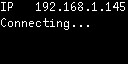
Without DHCP
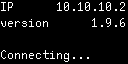
In a lab network without a DHCP server, the OLED will display the message below and admins will have to update the LAA network configuration.
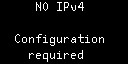
In order to configure the network, admins should browse to the LAA embedded
web interface.
By default the embedded web interface is only available on the
public network interface. To access it from the private network interface,
press the Soft Recoverybutton and wait for the OLED to display:
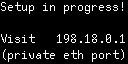
Connect the admin laptop to the private LAA network interface. The LAA will automatically assign an IP address using DHCP to the laptop. Then browse to the LAA private IP address at http://198.18.0.1
Private network interface
The private LAA network interface is the ethernet port facing upward and
labeled DUT Eth.
Network access
When connected to the private network interface, a PC will be assigned the IP
198.18.0.2 but the PC will only be able to connect to the LAA at
198.18.0.1.
From this network, it’s not possible to have access to the local network nor the public internet.
To use the web interface, browse to http://198.18.0.1/.
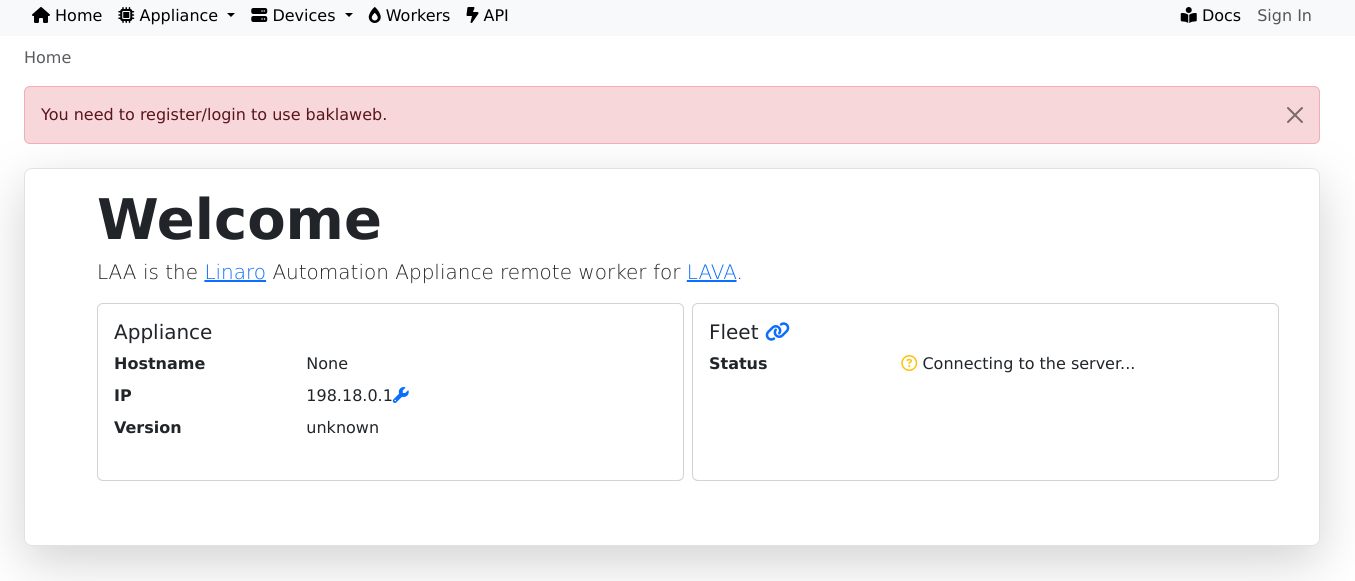
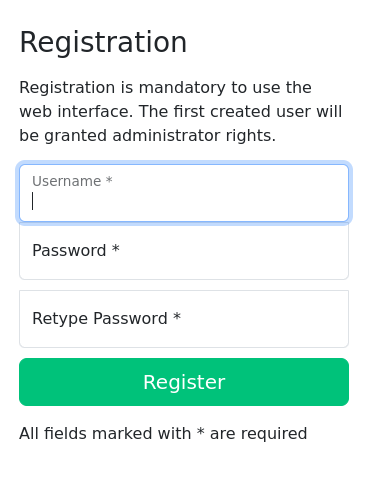
Start by creating the first user that will be automatically granted administration rights.
Now you can browse to the network configuration page at http://198.18.0.1/appliance/network/settings/ and update the network configuration.
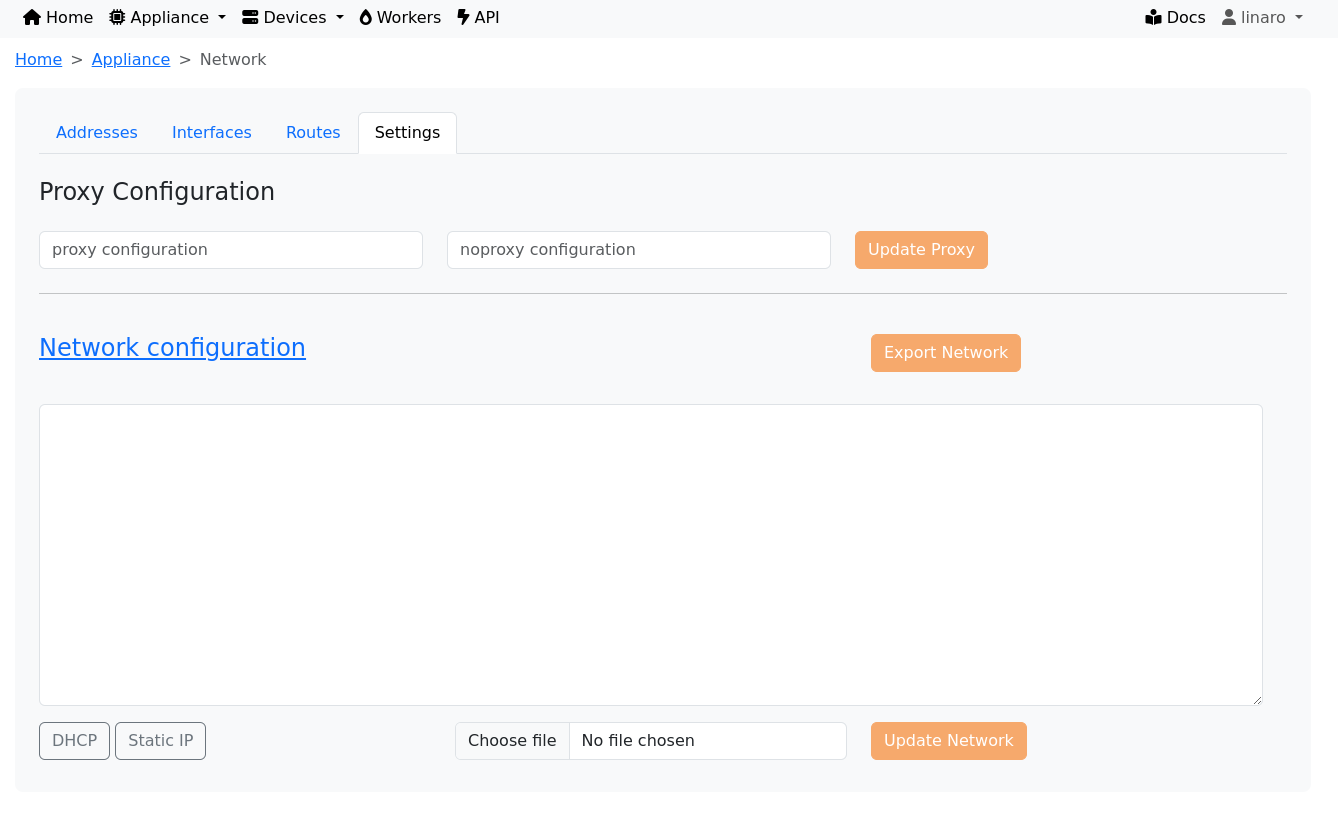
The configuration is using systemd-network syntax.
To configure a static IP address, use:
[Match]
Path=platform-30bf0000.ethernet

[Network]
Address=10.10.10.2/24
Gateway=10.10.10.1
Click on Update Network, the LAA should now have an IPv4 and the OLED display
will look like:
Setup in Progress
In order to display the above content, press again the Soft Recovery button
to disable access to the embedded web interface from the private network
interface.
Cloud connectivity
Direct connection
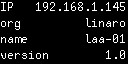
The LAA should now automatically connect to the fleet management cloud service and display:
Cloud connectivity
The first connection to the cloud can take up to 20 seconds. If the LAA is not displaying the above message, then proceed to the next chapter about HTTP proxy.
If this isn’t the case, it’s likely that the LAA should use an HTTP Proxy to connect to the public internet.
HTTP Proxy
If the LAA should use an HTTP proxy to access internet, this should be configured in the LAA web interface.
Browse to the network configuration page, specify the http proxy address and
click on Update Proxy.
Public network interface
The LAA now has an IPv4, so you can directly browse to the LAA IPv4 printed on the OLED. You should connect your PC to the same lab network as the LAA public network interface.
The OLED should now display:
If this isn’t the case, it’s likely that the LAA should allow for SSL Interception.
SSL Interception
Some corporate networks terminate outbound HTTPS at the firewall and re-sign it with an internal certificate authority (CA). The LAA doesn’t trust that CA by default, so its connection to the fleet management cloud service fails and the OLED never show reach the working message, even though the proxy is correctly configured.
The fix is to install your organisation’s root CA on the LAA.
Browse to the LAA web interface and open Appliance > Root CAs, or go directly
to:
http://<laa-ip>/appliance/cas/

Pick the root CA certificate file used by the intercepting proxy and click
Add CA. The certificate is then listed with its SHA-256 fingerprint and its
issue and expiry dates, and is trusted immediately, without rebooting.
Which certificate?
Ask your IT department for the root CA of the intercepting proxy. It is the same certificate they already deploy to managed laptops, so it is usually available from an internal IT page.
Administrator rights
Only accounts with administrator rights can add or delete a root CA. A regular user sees the list but cannot change it.
The LAA should now connect and the OLED display the working message.
See the web interface page for more details.
Certificate expiry
A root CA has an expiry date, shown in the list. When it expires the LAA will stop being able to reach the cloud service until the replacement certificate is uploaded.